

Last year’s Valentine’s Day post was about the single life, this one’s on marriage. Any correlation with my own love life is purely coincidental 🙂
Many critics have already pointed out the significance of To the Lighthouse for Woolf as a therapy in dealing with the death of both her parents, events that drastically influenced her in an early stage of life – Virginia’s mother, Julia Stephen, died on the 5th May 1895; her father, Sir Leslie Stephen, on 22nd February 1904. Apart from proffering an ode to her parents, the Ramsays also elucidate Woolf’s opinions on matrimony. In her own life, a quite different policy can be seen towards women and their situation than the one illustrated by the Ramsays in To the Lighthouse.
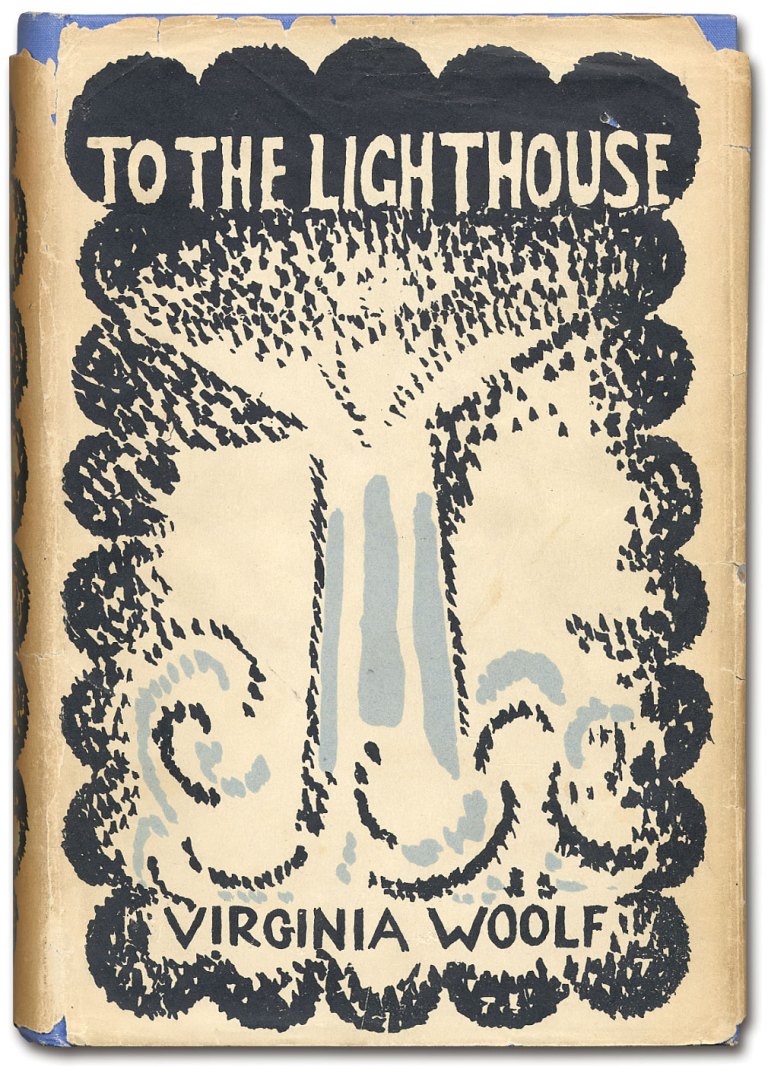
At first sight the Ramsay marriage seems fairly traditional. Mrs. Ramsay behaves like the perfect Victorian hostess, dedicated to her husband, a London Professor of Philosophy, and her eight children. “She transferred to [her son James] what she felt for her husband” (Woolf, Virginia. 1927. To the Lighthouse. Penguin Books, London. 1992: 36); she adores them, “for they were gifted, her children, but all in quite different ways.” (Woolf 1992: 32) “[A]ll, she thought, were full of promise.” (Woolf 1992: 65) She even quits worrying about the shabbiness of their summer holiday house, merely because “the children loved it” and “it did her husband good”. (Woolf 1992: 31) The main concern of Mr. Ramsay is to give his wife and children the protection he feels is needed.
Yet, this protection can also be seen as a male superiority, and the way Mrs. Ramsay, like most women of the time, has been raised to be devoted to her husband and children, can be experienced as a burden. The academic Mr. Ramsay sometimes seems incompatible with the domestic world of his wife. Mrs. Ramsay laments “the sterility of men” (Woolf 1992: 91) in not being able to connect with others. According to Lily, Mr. Ramsay is tyrannical and unjust, “oblivious, careless, remote” (Woolf 1992: 52) and narrow-minded. Mrs. Ramsay regrets his never being sensible enough to see little things of beauty; even to the flowering loveliness of his own daughter he is blind. His children can only make him proud when getting a scholarship, unlike his wife, who loves them no matter what becomes of them. She rather prefers ‘boobies’ to intellectuals, and thus sometimes looks upon Mr. Ramsay’s vanity and haughty declamations of poetry as ridiculous.
Mrs. Ramsay also has her flaws in the eyes of her husband. He can be enraged at her irrationality in exaggerating and inventing lies to soothe her children, and fears his daughters will take on this habit of hers. Moreover, he accuses her of being too pessimistic, stern and remote. He feels powerless and incompetent in protecting her when she shifts into one of her sad moods again. In line with his sense of intellectual superiority, he “exaggerated her ignorance, her simplicity, for he liked to think that she was not clever, not book-learned at all”. (Woolf 1992: 131)
One can imagine Mrs. Ramsay must occasionally regret her lack of education, especially because she sometimes feels unable to express herself convincingly with words. She could, for instance, never transfer her feelings to her husband:
“He wanted something – wanted the thing she always found it so difficult to give him; wanted her to tell him that she loved him. And that, no, she could not do. He found talking so much easier than she did. He could say things – she never could.” (Woolf 1992: 133)
At times rumours are spread that Mrs. Ramsay’s silence was due to some tragic incident in her past:
“What was there behind it – her beauty, her splendour? Had he blown his brains out, they asked, had he died the week before they were married – some other, earlier lover, of whom rumours reached one?” (Woolf 1992: 34)
She does contemplate on her choices made:
“[S]he thought, possibly she might have managed things better – her husband; money; his books. But for her own part she would never for a single second regret her decision, evade difficulties, or slur over duties.” (Woolf 1992: 10)
Her daughters, however, seem less likely to be kept down in this traditional notion of womanhood:
“[A]nd it was only in silence … that her daughters – Prue, Nancy, Rose –could sport with infidel ideas which they had brewed for themselves of a life different from hers; in Paris, perhaps; a wilder life; not always taking care of some man or other.” (Woolf 1992: 10)
This indecisiveness about one’s achievements seems to hunt Mr. Ramsay too, who, according to Charles Tansley, “had dished himself by marrying a beautiful woman and having eight children”. (Woolf 1992: 98). Mrs. Ramsay knows that her husband sometimes feels that “he would have written better books if he had not married”. (Woolf 1992: 77)
“He was always uneasy about himself … He would always be worrying about his own books –will they be read, are they good, why aren’t they better, what do people think of me?” (Woolf 1992: 128).
Everyone surrounding him feels the pressure to assure him he is not a failure by showing continual praise and encouragement.
“It was sympathy he wanted, to be assured of his genius, first of all, and then to be taken within the circle of life, warmed and soothed, to have his sense restored to him, his barrenness made fertile.” (Woolf 1992: 43)
After Mrs. Ramsay has pumped all her strength and energy in reassuring him, she feels completely exhausted. She does not like people to see him show so openly that he depends upon her, because in the public space, he is the one in power:
“But why show it so plainly … Why could he never conceal his feelings?” (Woolf 1992: 104)
Mr. Bankes remarks on Mr. Ramsay that it is pitiful that “he changed from one mood to another so suddenly”. (Woolf 1992: 52) Although he is aware of his own touchiness, he is still quick tot take offence when Mr. Carmichael, for instance, merely asks for another plate of soup. As Levy says, he is “‘dramatizing’ his feelings in order to impress, dominate, or exploit others” (Levy, Eric P. 1996. “Woolf’s Metaphysics of Tragic Vision in To the Lighthouse.” Philological Quarterly, 75:1, Winter).
Many times, they both feel uncomfortable, wanting to communicate but unable to do so, because one of them always looks as if they do not want to be disturbed.
“Do say something, she thought, wishing only to hear his voice. For the shadow, the thing folding them in was beginning, she felt, to close round her again. Say anything, she begged, looking at him, as if for help.” (Woolf 1992: 133)
As Mrs. Ramsay ponders, “all this diminished the entire joy, the pure joy, of the two notes sounding together, and let the sound die on her ear now with a dismal flatness … it was painful to be reminded of the inadequacy of human relationships.” (Woolf 1992: 45) During dinner, we can read how she even thinks “[s]he could not understand how she had ever felt any emotion or any affection for him.” (Woolf 1992: 91) Overall, the reader gets the impression they do not have a satisfying marriage.
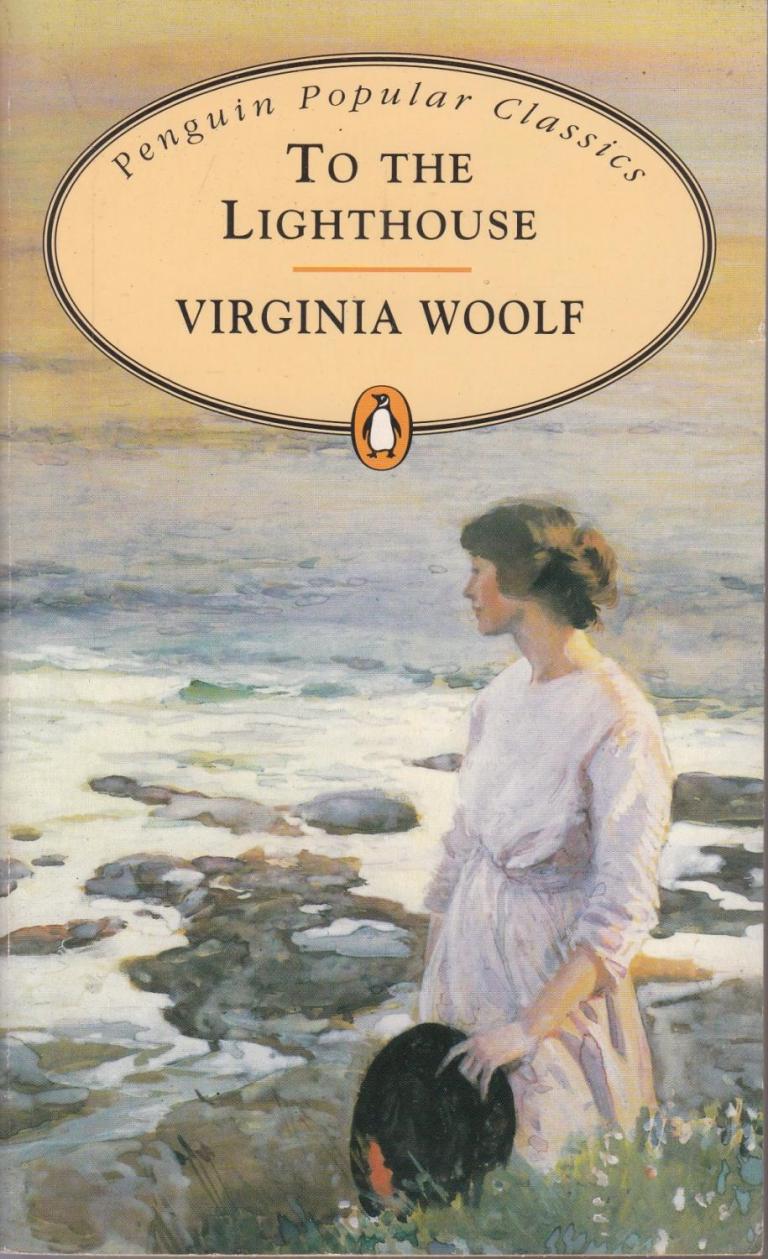
Still, Mrs. Ramsay is determined to marry all the young people she knows. She interferes and manipulates them until they do as she likes, because, according to Mrs. Ramsay, “an unmarried woman has missed the best of life.” (Woolf 1992: 56) She arranges for people to make trips together, puts pressure on Paul to propose to Minta, and on Minta to accept his proposal. She would even reprimand her if she did otherwise, because Mrs. Ramsay sees no reason why she should not marry. Nevertheless, the Rayleys’ marriage seems to have failed. Both Paul and Minta appear to have had extramarital relations; at their best, they merely seem to live like friends. Mrs. Ramsay plans on matching Lily Briscoe and William Bankes as well, sending them on a long walk or a picnic together. She assumes Bankes, being an older man, will be one of the few to see the charm in Lily’s Chinese eyes.
“They have so many things in common. Lily is so fond of flowers. They are both cold and aloof and rather self-sufficing”, Mrs. Ramsay thinks. (Woolf 1992: 113)
Lily and Bankes, however, never married. Although Bankes “had shared with her something profoundly intimate” (Woolf 1992: 60) in seeing what she intends to achieve in her painting, and she senses, seeing Paul and Minta, that “[i]t is so beautiful, so exciting, this love, that I tremble on the verge of it” (Woolf 1992: 111), Lily pleads that “she liked to be alone; she liked to be herself; she was not made for that.” (Woolf 1992: 56) She defends herself, saying “[t]his is not what we want; there is nothing more puerile, and inhumane than love” (Woolf 1992: 112).
“[S]he need not marry, thank Heaven: she need not undergo that degradation. She was saved from that dilution.” (Woolf 1992: 111)
Still, “his friendship had been one of the pleasures of her life. She loved William Bankes.” (Woolf 1992: 192)
Lily opts out of a traditional marriage, and, as Barr states, feels unable to participate in “a socially approved desire for a masculine other” (1993: 130). She chooses to ignore the social laws concerning men and women in not making Charles Tansley feel comfortable.
“There is a code of behaviour she knew, whose seventh article (it may be) says that on occasions of this sort it behoves the woman, whatever her own occupation may be, to go to the help of the young man opposite so that he may expose and relieve the thigh bones, the ribs, of his vanity, of his urgent desire to assert himself … But how would it be, she thought, if neither of us did either of these things?” (Woolf 1992: 99)
But, to please Mrs. Ramsay, “for the hundred and fiftieth time Lily Briscoe had to renounce the experiment –what happens if one is not nice to that young man there – and be nice.” (Woolf 1992: 100) She thinks of human relationships, especially those between men and women, as highly insincere. After Mrs. Ramsay’s death, Lily feels herself obliged to take over the comforting role of giving sympathy to Mr. Ramsay, but she wants to “escape his demand on her … that imperious need” (Woolf 1992: 160). She thinks his excessive demand to soothe his grief is indecent, and feels herself betraying her own womanliness in being unable to give him what he wants:
“No, she could not do it. She ought to have floated off instantly upon some wave of sympathetic expansion: the pressure on her was tremendous.” (Woolf 1992: 165)
“She had never been able to praise him to his face, she remembered. And that reduced their relationship to something neutral, without that element of sex in it.” (Woolf 1992: 185)
Lily’s virginity is connected with her escapism into her painting. As Barr says, “[i]nstead of being ‘abducted’ by any man, she assumes the role of creator at the novel’s end … She will not produce children, she will produce art” (1993: 135-142). By this image of the independent female artist, Woolf is said to present “a utopian politics of self-determination for women” (Barr. T. 1993. “Divine Politics: Virginia Woolf’s journey towards Eleusis in To the Lighthouse.” Boundary, 2, 20/1. Spring: 132).
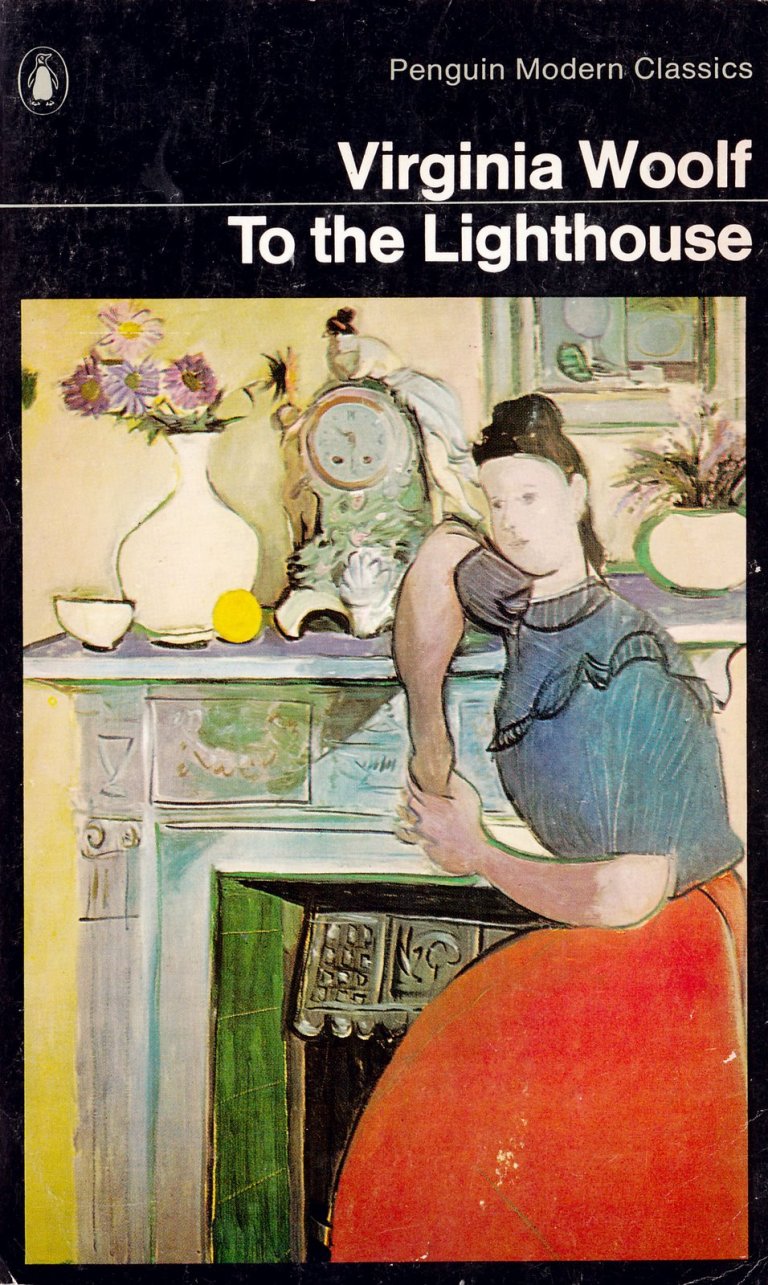
Woolf herself, however, rejected “the ideal, pure image of women, and frankly [explored] sexuality and the unconscious” (Zamorano, A. 1998. “Woolf’s Androgynous Ideal and the Desire to Write Beyond Representation” in Gallardo, P. and E. Llurda, Proceedings of the XXII International Conference of AEDEAN: 372). DeSalvo states that “all of the women within the [Stephen] family were the victims of abuse or sexual violence – Virginia herself, her sister Vanessa, her half-sisters Laura and Stella, her mother Julia” (Barr 1993: 143). Maybe the sexual abuse Virginia suffered from her half-brothers George and Gerald – the shame of which she, in a psychoanalytic way, would try to overcome in her writing – was the cause for Virginia’s marriage with Leonard Woolf never to be fully consummated. In the second part of 1912, the year Virginia and Leonard married, Woolf would be ill, depressed and suicidal (Marcus, Javier. 1997. “Biographical Outline.” Virginia Woolf. Northcote House in association with The British Council, Plymouth: viii). Strikingly, Leonard seems to have been as impossible in his demands when working in the printing press as Mr. Ramsay was in imploring sympathy.
Virginia’s sexual orientation would be chiefly directed towards women, and during the 1920s she is said to have had an affair with Vita Sackville-West, besides maintaining close friendships with Madge Vaughn, composer Violet Dickinson, and suffragette Ethel Smyth. She valued intelligence much higher than beauty, and in that made no distinction of gender.
Virginia feels out of place in a society where the real achievement seems to be to produce offspring, and her sister Vanessa, who mirrors Mrs. Ramsay in dealing perfectly well with her husband, children and servants, strongly contrasts with Virginia, incompetent to deal with her role as a housewife. She feels trapped in suburban Richmond, pitying the “political repressiveness of the bourgeois familial constellation” (Barr 1993: 129). According to Zamorano, the encouragement for her androgyne self to develop springs from the need “to expose the social constraints implicitly at work in the information of womanhood.” (1998: 369). She experiences this traditional state of mind as being forced upon women, uncomfortable and repressive. Critics claim that “Woolf depicts marriages in which women are required to subjugate the self to the masculine other, thus denying their autonomy and their wholeness” (“Virginia Woolf on Marriage.” 2004). She seems to share the rather negative perception of marriage with Lily Briscoe, and, instead of painting, challenges the traditional norms with her writings. Androgynous and not fully feeling part of society, she figures herself in the perfect position to oppose traditional patriarchal discourse, in which even Mrs. Ramsay had proved to feel unqualified. Having once cleared the road for women to fully express their own identity, Woolf feels this will eventually lead to changes in social patterns as well.
Taking all of this into consideration, one would easily conclude that Woolf did not have a fortunate marriage. Yet, quite the opposite is true, as the couple stayed together sharing a close bond, and Woolf surely felt her marriage to be complete. In her last note to Leonard before committing suicide, she even wrote:
“You have given me the greatest possible happiness. You have been in every way all that anyone could be. I don’t think two people could have been happier” (Woolf 1941).
Similarly, she judges the Ramsay marriage to have been a happy one too in the end. Mrs. Ramsay declares, that, despite her husband’s shortcomings, “[t]here was nobody whom she reverenced as she reverenced him.” (Woolf 1992: 37) On the whole, he seems to her sensible and just, optimistic and clever. She would refute everyone criticising him, and convince more young people to listen to his brilliant thoughts. She admires him because “[h]e went to the heart of things.” (Woolf 1992: 103) Not only does she approve his mind, his strong and still attractive body contents her eye as well, and makes her remind his gallantry as a young man, grasping her hand to lift her out of a boat. They occasionally quarrelled fiercely; still, enough moments of happiness were left, for instance when Mr. Ramsay “seized her hand and raised it to his lips and kissed it with an intensity that brought the tears to her eyes” (Woolf 1992: 77) or when they watch their daughter play in the garden. Although they can not always express how they feel towards each other using conventional words, the couple seems to fully understand each other without needing to speak, merely looking at each other down the table. They can still feel like there is just them in the world, and “though she had not said a word, he knew, of course he knew, that she loved him.” (Woolf 1992: 134) Mrs. Ramsay smiles, “thinking to herself, Nothing on earth can equal this happiness.” (Woolf 1992: 134) Lily considers them “the symbols of marriage, husband and wife” (Woolf 1992: 80), and, according to Auerbach, To the Lighthouse is “filled with good and genuine love” (Auerbach, E. 1946. “The Brown Stocking” in M. Beja (ed.) Virginia Woolf. To the Lighthouse. London: Macmillan, 1970: 130).
These moments of happiness, which unite them in the same experience by “that community of feeling with other people which emotion gives” (Woolf 1992: 123) remind Mrs. Ramsay of the essential things in life. She recalls what has been forgotten, and happy moments in the past continue to give meaning to the present. All these together constitute a feeling of wholeness, stability and continuation, and because these few moments of delight have been collective, in spite of being ephemeral, the memory of it lets everyone partake of eternity:
“It partook, she felt … there is a coherence in things, a stability; something, she meant, is immune from change, and shines out … in the face of the flowing, the fleeting, the spectral, like a ruby … Of such moments, she thought, the thing is made that remains for ever after. This would remain.” (Woolf 1992: 114)
By and large, Virginia Woolf provided women with alternative courses of coping with marriage, handing varying models both in her works and in her private life. According to Woolf, a sound outlet of personal expression in one or another form of art is needed in order to achieve happiness in society. By alternating between pleas for and condemnations against marriage, Woolf reveals a nuanced point of view. Never does she exclude matrimonial happiness, the core of which ought to be mutual understanding.
This essay was originally written in 2007 during a course on English Modernism at the University of Barcelona.
Read more:
- Decker, Cathy. 2001. “To the Lighthouse by Virginia Woolf”. A Study Guide.
- Nelson, Gayla. “Moments of Being.” My Personal Response to Virginia Woolf’s Works.
- My essay on postmodernism and homosexuality in Mrs. Dalloway by Virginia Woolf
 Kirsten Malfroid
2 gedachtes over “Marriage in Virginia Woolf’s To the Lighthouse”
Reacties zijn gesloten.